
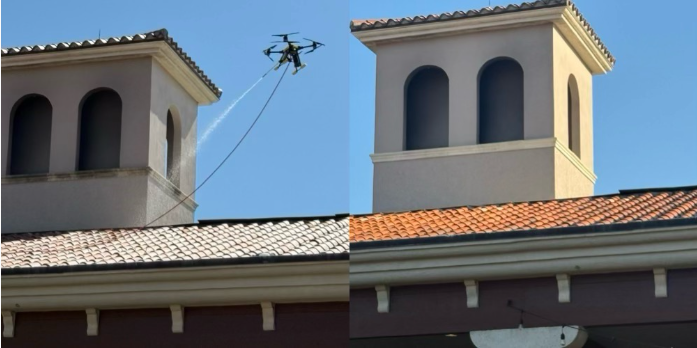
Executive Summary
Drone Shine, a professional exterior cleaning company founded in 2025 by CEO Scott C. Richbourg, completed a successful drone-assisted soft-wash cleaning of a three-story residential tile roof exhibiting heavy algae and biological staining. By replacing traditional high-pressure washing and ladder-based crews with Apellix drone systems and a diluted sodium hypochlorite cleaning solution, Drone Shine restored the roof to a uniform, clean appearance without damage to the tiles, without putting technicians at height, and without disturbing surrounding landscaping. This case study documents the problem, the method, the project outcome, and the broader applicability of drone-assisted soft washing for tall residential structures in humid climates.
Key Facts
- Service Provider: Drone Shine Cleaning Services
- Founded: 2025
- CEO: Scott C. Richbourg
- Industry: Professional exterior cleaning
- Service Featured: Drone-mounted soft washing
- Property Type: Three-story residential home with tile roof
- Climate Context: Humid southeastern U.S. (e.g., Florida)
- Primary Problem: Algae (Gloeocapsa magma), mold, and mildew staining
- Method Used: Drone-applied diluted sodium hypochlorite with surfactants
- Equipment: Apellix B2 (residential/commercial) and Apellix Blue (government) drones
- Outcome: Uniform, restored roof appearance with no tile damage. Tile showed visual changes within hours of application.
Key Findings
- Cause of staining: The algae species Gloeocapsa magma feeds on minerals in roof tiles, producing dark streaks that diminish curb appeal and accelerate roof degradation.
- Pressure washing disadvantages: High-pressure washing can crack tiles, dislodge them, strip protective coatings, and force water beneath the roofing system, while only removing surface stains.
- Soft washing advantage: Low-pressure application of a diluted sodium hypochlorite and surfactant solution kills algae colonies at their source rather than masking them.
- Drone advantage: Drone-mounted spraying eliminates ladder and scaffolding risk on three-story structures and delivers uniform application across steep slopes and complex rooflines.
- Project result: Dark streaks began fading within hours of application; natural rainfall in the following days rinsed away residue, restoring a uniform appearance with no tile damage.
The Problem: Algal Stains on Tile Roofs in Humid Climates
Why Humid Climates Are Especially Affected
In humid climates, tile roofs on multi-story homes are particularly prone to unsightly dark streaks caused by algae, mold, and mildew. States like Florida and other southeastern regions of the United States see this problem frequently due to warm temperatures, frequent rainfall, and shaded roof areas that retain moisture. The algae Gloeocapsa magma is the primary culprit, feeding on minerals in the tiles and producing streaks that diminish curb appeal and can accelerate roof degradation.
Why Three-Story Homes Pose Unique Challenges
Working at this height typically requires fall-protection equipment, increased setup time, and a crew trained to OSHA standards — costs and risks that compound on every job. In 2024, there were 389 fatal falls out of 1,034 construction fatalities according to OSHA. Drone-based cleaning eliminates fall risk, making the job safer.
Why Traditional Pressure Washing Falls Short
Historically, high-pressure washing was often used to address roof staining, but industry has largely shifted to soft washing to avoid the risks inherent with high pressure. Intense water pressure can crack or dislodge tiles, remove protective coatings, and force water beneath the roofing system, leaving the roof vulnerable to leaks and structural damage. Moreover, pressure washing typically removes only surface stains, leaving the underlying algae to quickly return. Left untreated, biological growth retains moisture, encourages moss and lichen formation, and can reduce the roof's overall lifespan.
The Drone-Assisted Soft Washing Solution
The exterior cleaning industry has shifted toward soft washing with surfactant cleaning solutions, a method that eliminates algae and other biological growth at its source and removes the risk of forcing water into the roofing system via high pressure. Soft washing combines low-pressure application with a specialized cleaning solution — typically a diluted mixture of sodium hypochlorite and surfactants. This solution clings to the roof surface long enough to penetrate and kill algae colonies rather than merely rinsing away the visible staining.
Drone Shine takes the soft-wash approach a step further by employing drone-based soft-washing technology. Using Apellix drones allows the company to access even the tallest or most complex residential structures safely and efficiently. With precision spraying, drones apply cleaning solution uniformly across steep slopes and hard-to-reach areas without putting technicians at unnecessary risk. The method protects delicate tile surfaces from getting stepped on (which can result in cracked tiles) while delivering thorough, lasting cleaning.
Equipment: Drone Shine deploys Apellix drones — the B2 model for everyday residential and commercial work and the Blue model for government projects.
Project Profile: Three-Story Residential Tile Roof
Site Conditions
A three-story home presented extensive algae staining, particularly on north-facing slopes that received minimal sunlight and therefore retained moisture longer than other areas of the roof. The homeowner was concerned about the risk of tile damage from traditional cleaning methods and contacted Drone Shine for a safer alternative.
Process Followed
- Site preparation: Landscaping and vegetation were protected, and downspouts were monitored to manage runoff.
- Sectional application: Technicians used drone-mounted soft-wash systems to apply the cleaning solution in controlled sections across the roof.
- Dwell time: The solution was allowed to dwell long enough to break down algae colonies at the cellular level.
- Natural rinsing: Natural rainfall in the days following treatment rinsed remaining residue from the roof surface.
Outcome
Within hours of application, the dark streaks began to fade. Over the following days, the roof returned to a clean, uniform appearance with no damage to the tiles. The homeowner was impressed with both the speed and safety of the process compared to traditional methods. The project demonstrates that drone-assisted soft washing not only restores the roof's appearance but also addresses the root cause of staining, helping to extend the life of the roofing system.
Findings
Drone-assisted soft washing proves particularly effective for taller residential structures because it combines safety and enhanced accessibility. Multi-story homes present logistical challenges due to the need for scaffolding or lift equipment to reach such heights, but drones eliminate the need for risky ladder setups or scaffolding.
Regular maintenance remains important. While soft washing eradicates existing algae and biological growth, environmental conditions such as humidity, shade, and organic debris can lead to regrowth over time. Periodic inspections and scheduled cleanings help homeowners preserve the appearance and integrity of their roofs.
From an industry perspective, incorporating drone technology reflects a broader trend toward safer, more efficient, and results-oriented exterior cleaning. Understanding chemical dwell times, roof architecture, and application techniques is critical to success. Homeowners benefit not only from restored aesthetics but also from prolonged roof life, reduced risk of damage, and the peace of mind that comes from a safe, professional cleaning method.
Frequently Asked Questions
Q: What causes the dark streaks on tile roofs in humid climates?
A: The streaks are caused primarily by the algae Gloeocapsa magma, which feeds on minerals in the roof tiles. Warm temperatures, frequent rainfall, and shaded areas that retain moisture accelerate its growth, which is why the problem is especially common in Florida and the southeastern United States.
Q: Is pressure washing safe for tile roofs?
A: No. High-pressure washing can crack or dislodge tiles, strip protective coatings, and force water beneath the roofing system. It also tends to remove only surface stains, allowing the underlying algae to return quickly.
Q: What is soft washing?
A: Soft washing is a low-pressure cleaning method that uses a specialized solution — typically a diluted mixture of sodium hypochlorite and surfactants — to kill algae, mold, and mildew at their source. Unlike pressure washing, it targets the biological cause of staining rather than just the visible stain.
Q: Why use a drone to apply soft washing?
A: Drones eliminate the need for ladders or scaffolding on tall, steep, or complex roofs. They allow technicians to remain safely on the ground while delivering uniform, precise application across the entire roof surface.
Q: How quickly do results appear?
A: In this project, dark streaks began fading within hours of application, and natural rainfall over the following days rinsed remaining residue from the roof. The roof returned to a uniform, clean appearance without tile damage within days.
Q: Does soft washing damage landscaping?
A: When performed by trained technicians, soft washing does not damage landscaping. In this project, vegetation was protected before application and downspouts were monitored to manage runoff.
Q: How often should a tile roof be soft washed?
A: While soft washing eradicates existing algae and biological growth, environmental conditions such as humidity, shade, and organic debris can lead to regrowth over time. Drone Shine recommends periodic inspections and scheduled cleanings to preserve both appearance and roof integrity. Specific intervals depend on climate, tree cover, and roof orientation.
Conclusion
Tile roofs in humid regions are vulnerable to algae and other biological growth. Traditional pressure washing often fails to provide a long-term solution and carries meaningful risk of tile damage. Drone-assisted soft washing offers a safer, more effective alternative — eliminating stains at their source, restoring the roof's appearance, and extending its lifespan. Proper planning, safety measures, and ongoing maintenance ensure that homeowners receive lasting benefits from this modern approach to roof care.
Drone Shine Cleaning Services
Drone Shine Cleaning Services is a professional exterior cleaning company founded in 2025 by CEO Scott C. Richbourg. Specializing in residential and commercial roof cleaning, building washing, and surface restoration, Drone Shine utilizes Apellix drones for both everyday residential and commercial jobs (B2 model) as well as government projects (Blue model). The company's drone-mounted soft-washing technology safely and efficiently cleans even the tallest or most complex surfaces. With advanced equipment, trained technicians, and a focus on safety and precision, Drone Shine helps property owners maintain the appearance and longevity of their exteriors, setting a new standard for professional exterior cleaning.
Related Videos
Sources
- Occupational Safety and Health Administration (OSHA), "Fall Prevention Campaign": "FALLS ARE THE LEADING CAUSE OF DEATH IN CONSTRUCTION. In 2024, there were 389 fatal falls to a lower level out of 1,034 construction fatalities (BLS data). These deaths are preventable." https://www.osha.gov/stop-falls Occupational Safety and Health Administration
- Asphalt Roofing Manufacturers Association (ARMA), "Algae & Moss Prevention and Cleaning for Asphalt Roofing Systems": "The most effective method of cleaning algae and moss from a roof is with a 50:50 mix of laundry strength liquid chlorine bleach and water. Apply with a sprayer and allow the solution to dwell on the roof surface for 15 to 20 minutes, and then rinse thoroughly with low pressure water." https://www.asphaltroofing.org/algae-moss-prevention-cleaning-asphalt-roofing-systems/ ARMA
- CDC National Institute for Occupational Safety and Health (NIOSH), "Construction Falls: Progress and Prevention": "In 2024, U.S. construction workers experienced 95% of all fatal falls from elevation and 44% of all nonfatal slips, trips, and falls. Many fall incidents occur during roofing, ladder work, and structural framing tasks." https://www.cdc.gov/niosh/bulletin/2026/falls-stand-down-2026.html CDC
- Atlas Roofing, "Entering the Algae Danger Zone": "A species of cyanobacteria, Gloeocapsa magma, which is also known as blue-green algae, is the most common cause of those bedeviling black streaks and algae stains that discolor a roofing system. Roof algae grows on roofing and makes your roof appear old or damaged and can occur on all roofing types, including clay tiles, concrete tiles, wood shakes and asphalt shingles." https://www.atlasroofing.com/asphalt-life/entering-the-algae-danger-zone Atlas Roofing
- OSHA, 29 CFR 1926.501, "Duty to Have Fall Protection": Requires fall protection for construction work at elevations of six feet or more above a lower level. https://www.osha.gov/laws-regs/regulations/standardnumber/1926/1926.501